The quality of your life is directly proportional to the things you say no to… true?
It’s a bold statement. Slightly uncomfortable too. Because it shifts the focus away from other people—and places it right back where most of us try to avoid it: on ourselves.
We’ve gotten quite good at talking about boundaries with others. There’s content everywhere—books, podcasts, toolkits—all teaching us how to stop being a yes-person. And honestly, that’s progress. Many of us know what it feels like to overcommit, to stretch ourselves too thin, to say yes when we really mean no.
And then there’s a quieter, more difficult question.
Do you know how to say no to yourself?
Not in theory. In real life. In those small, unguarded moments.
When no one is watching.
When no one is asking anything of you.
When the decision is entirely yours.
Can you sit yourself down—yes, yourself—and have an honest conversation? Can you pause long enough between impulse and action to interrupt the pattern?
Because let’s be honest.
That ice cream doesn’t land in your shopping cart by accident.
That extra hour of scrolling doesn’t just “happen.”
That decision you later regret often felt like a harmless yes in the moment.
And then, over time, those small yeses quietly start shaping your life.
The Internal Boundary Most People Ignore
Saying no to yourself is an internal boundary. And it might just be the most important one you’ll ever build.
Because when you can’t hold that boundary, everything else starts to slip.
Think about it for a moment.
If you had mastered saying no to yourself:
- Maybe that “irresistible” but toxic relationship wouldn’t have lasted that long
- Maybe your health goals wouldn’t keep restarting every Monday
- Maybe your bank account would look a little… happier
It’s not about being perfect. It’s about being honest.
And then being disciplined enough to act on that honesty.
The Real Cost of Saying Yes to Yourself Too Often
At first, it feels harmless. Even deserved.
“I’ve had a long day.”
“I’ll start tomorrow.”
“Just this once.”
And then those moments begin to stack.
1. Your Goals Start to Slip
Not dramatically. Not all at once. Just slowly.
You plan. You intend. You even get excited.
And then… you don’t follow through.
Not because you don’t care. But because in the moment, something else felt easier to say yes to.
2. You Start to Distrust Yourself
This one cuts deeper than most people realize.
Every time you break a promise to yourself, you chip away at your own self-trust.
And then something subtle happens.
You stop believing your own plans.
You stop trusting your own commitments.
You start negotiating with yourself before you even begin.
That’s not a productivity problem. That’s a leadership problem—with yourself.
3. You Drift Into Autopilot
You stop questioning your choices.
You stop pausing.
You stop directing your life—and start reacting to it.
And then days blur into weeks. Weeks into months. And suddenly, life feels… flat.
Not because you’re doing nothing. But because you’re not doing anything intentionally.
But here’s the shift.
The moment you start saying no—even in small ways—you wake up.
You switch the lights back on.
You begin to live on purpose again.
Every “No” Is a Hidden “Yes”
Here’s a reframe that changes everything.
Anytime you say no, you are saying yes to something else.
It might not feel like it in the moment. But it’s always true.
When you say no to distractions, you say yes to focus.
When you say no to overspending, you say yes to financial stability.
When you say no to comfort, you say yes to growth.
And then the reverse quietly plays out.
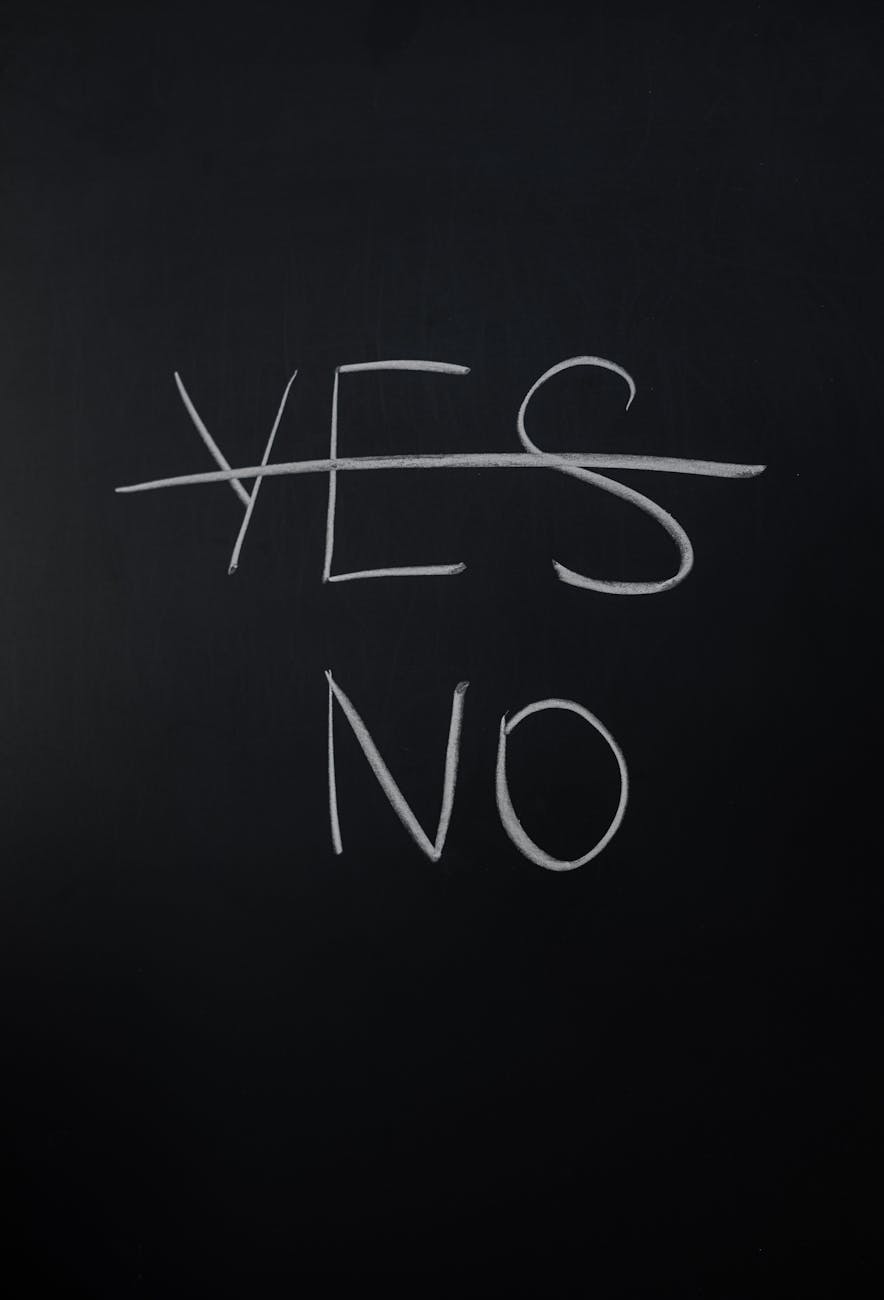
If you are constantly saying yes to yourself—without thought, without pause—you are also saying no.
No to your goals.
No to your priorities.
No to the life you say you want.
That’s the trade-off.
Whether you acknowledge it or not.
How to Build the Discipline of Saying No to Yourself
This is where it becomes practical. Because discipline is not built in theory—it’s built in daily decisions.
Let’s make this real.
1. Know Thyself (Yes, Really)
Before you try to fix anything, understand it.
Where are your weak spots?
Is it late-night snacking?
Impulse spending?
Endless scrolling?
Avoiding difficult conversations?
Get specific.
Because vague awareness doesn’t create change. Clear awareness does.
Start here:
- Identify one area where you struggle to say no
- Notice when it happens
- Notice what triggers it
No judgment. Just observation.
That’s your starting point.
2. Remove Temptation Instead of Fighting It
Let’s be honest—willpower is unreliable.
You might win in the morning. Lose in the evening.
So instead of constantly fighting temptation… reduce it.
If an app is draining your time—delete it.
If junk food is your weakness—don’t keep it in the house.
If distractions derail your work—change your environment.
This is not weakness. This is strategy.
You are not just trying to resist behavior—you are trying to rewire it.
And rewiring requires consistency, not constant struggle.
3. Rewire Your “No” by Tying It to a Bigger Yes
A “no” without meaning feels like punishment.
A “no” with purpose feels like power.
So give your “no” a reason.
Not just any reason—a meaningful one.
Instead of:
“I shouldn’t watch TV tonight”
Shift to:
“I’m choosing to spend time with my family because they matter to me”
Instead of:
“I shouldn’t spend money”
Shift to:
“I’m building financial freedom, and this matters more”
The difference is subtle. But powerful.
You’re no longer restricting yourself. You’re aligning yourself.
4. Delay, Don’t Deny
This one works surprisingly well.
You don’t have to say no forever. Just… not now.
Want to buy something impulsively? Wait 24 hours.
Want to quit your routine today? Give it one more day.
Want to indulge? Pause first.
And then something interesting happens.
The urgency fades.
The emotion settles.
Clarity returns.
You may still choose it. But now, it’s a decision—not an impulse.
5. Build an Identity That Supports Your Discipline
This is the long game.
Instead of focusing only on actions, start focusing on identity.
“I am the kind of person who is intentional about what I eat.”
“I am the kind of person who follows through.”
“I am the kind of person who honors my priorities.”
And then you begin to act in alignment with that identity.
Not perfectly. But consistently.
Because discipline becomes easier when it’s not something you force—but something that reflects who you are.
Final Thoughts: The Quiet Power of Self-Discipline
Saying no to yourself is not dramatic.
No one claps for it.
No one sees it.
No one even knows it happened.
And yet—it might be one of the most powerful skills you ever build.
Because every small “no” is a vote.
A vote for your future.
A vote for your goals.
A vote for the person you are becoming.
So start small.
Say no once today. Just once.
Pause before the impulse.
Choose differently.
Notice what happens.
And then do it again tomorrow.
Because over time, those quiet decisions don’t just change your habits.
They change your life.

 Lilian Ngima
Leave a comment